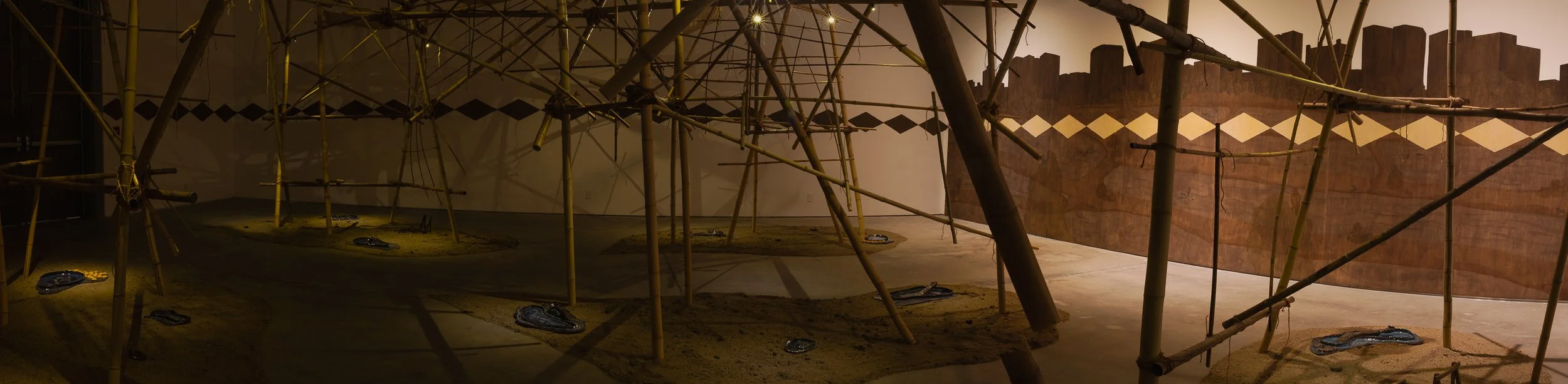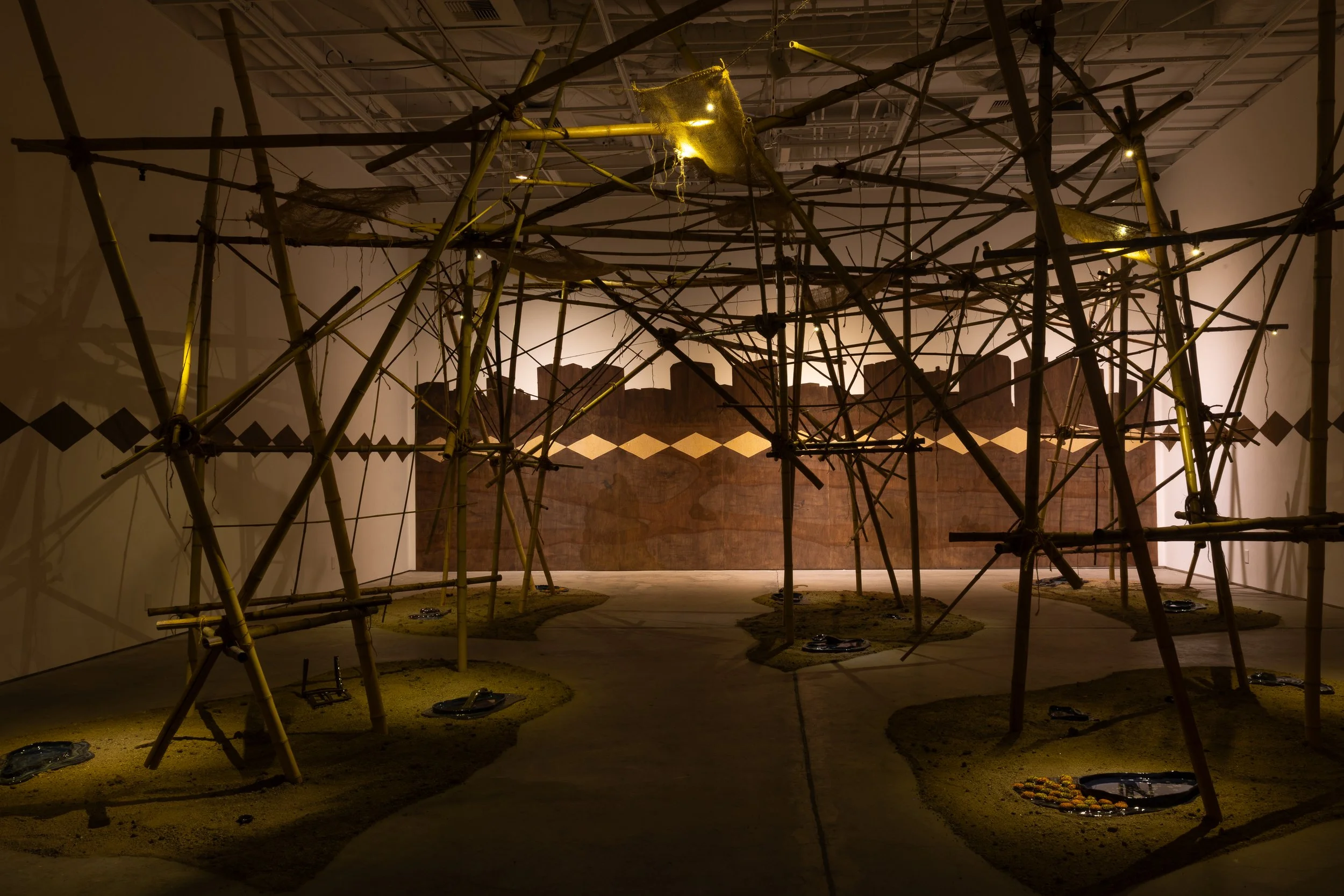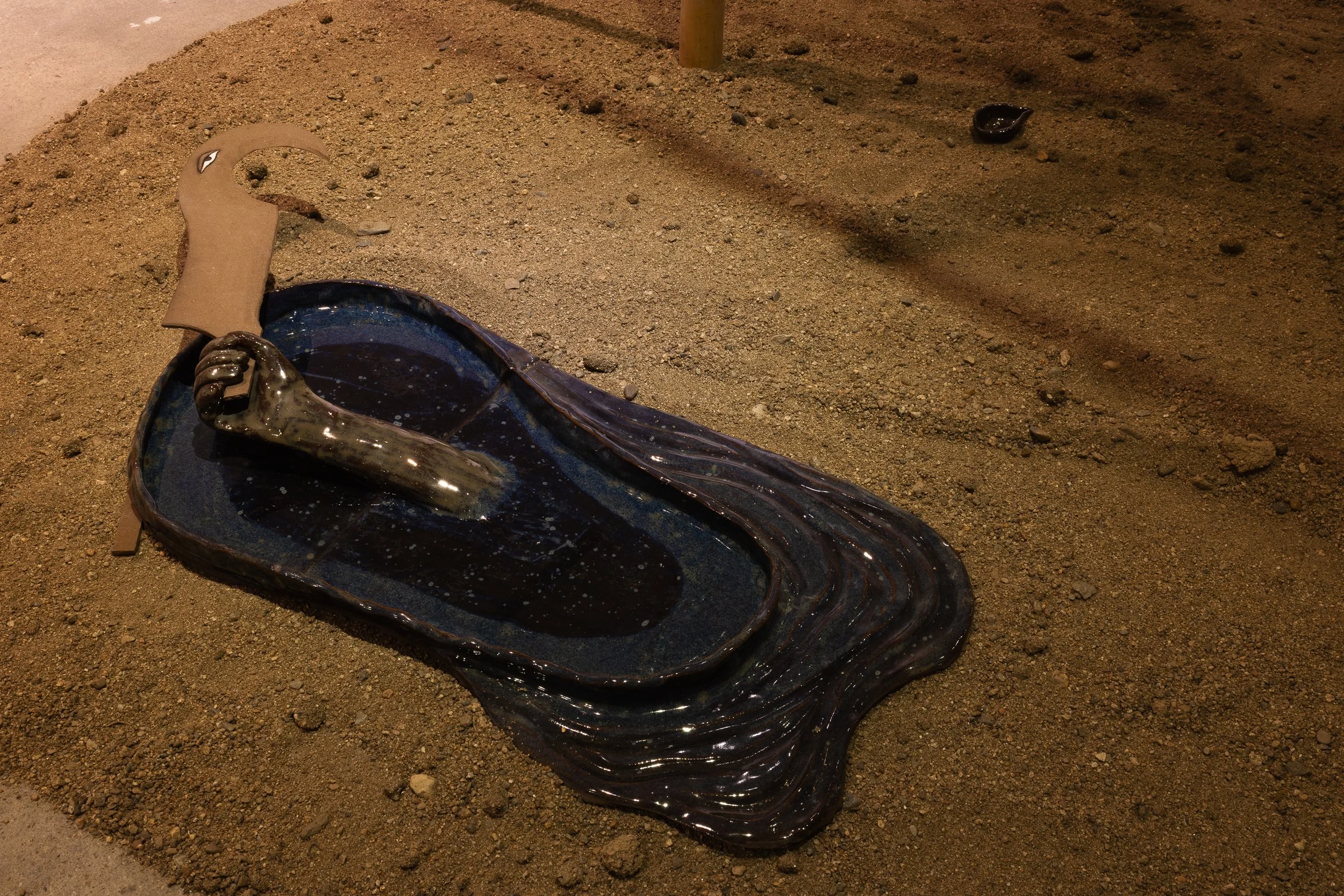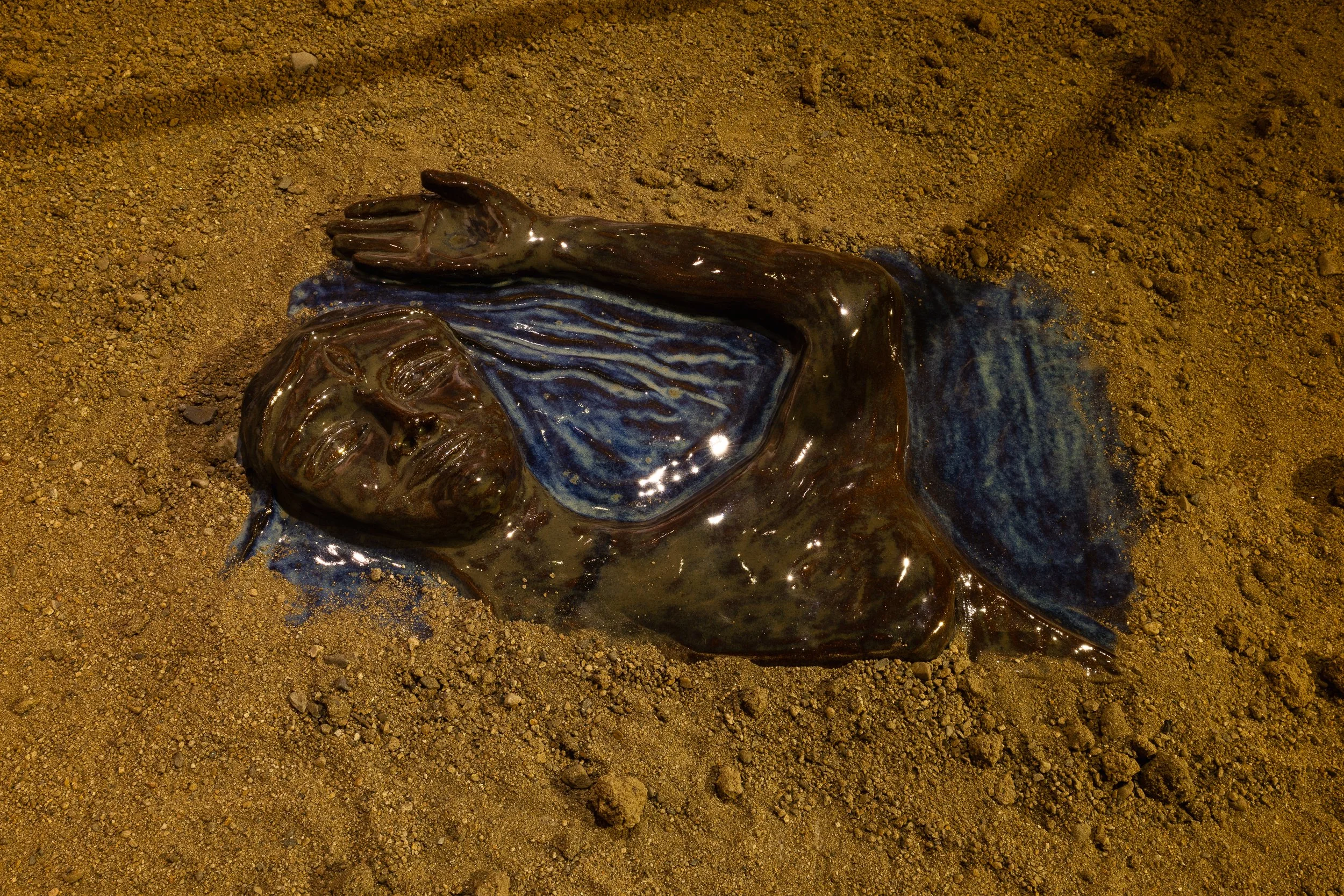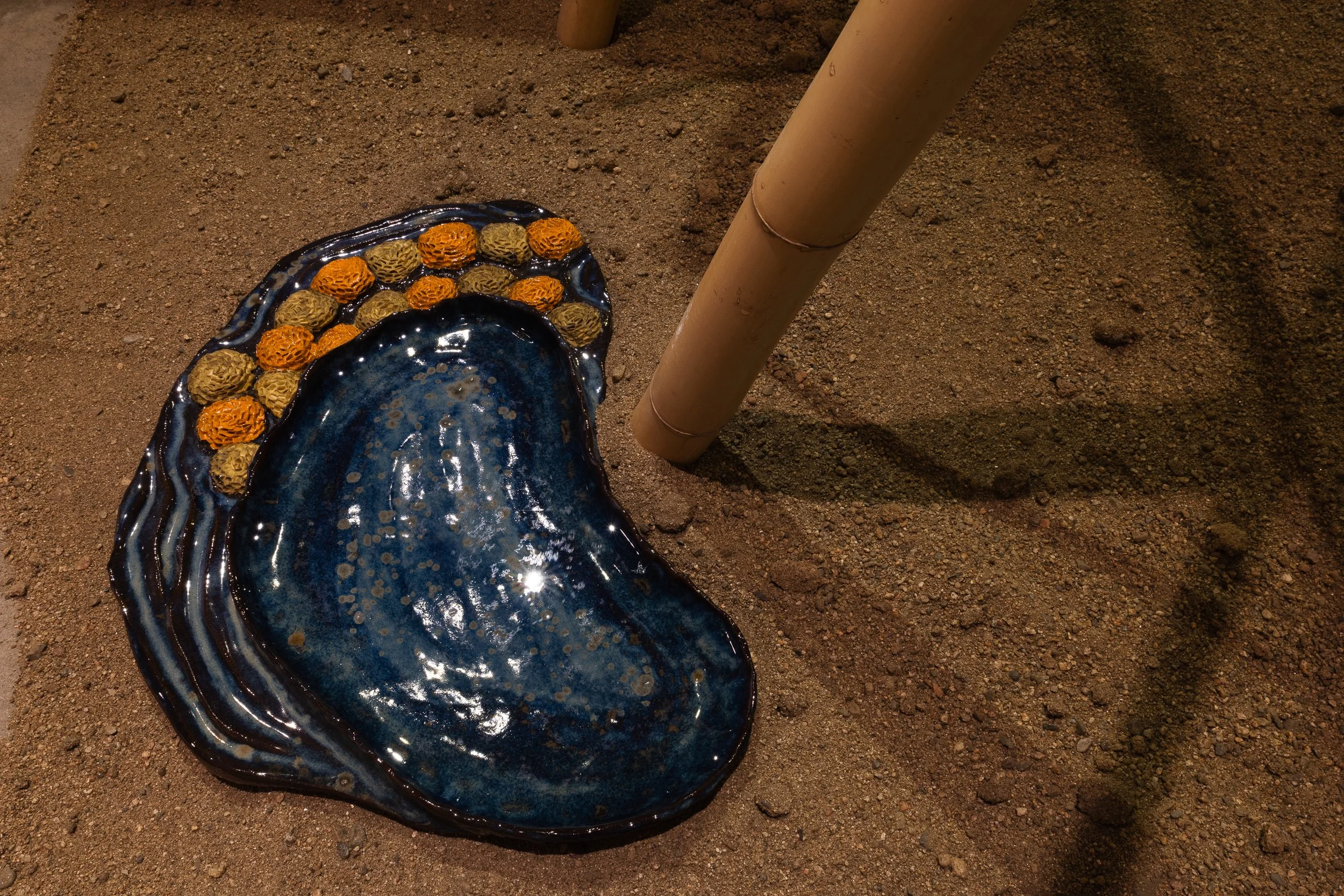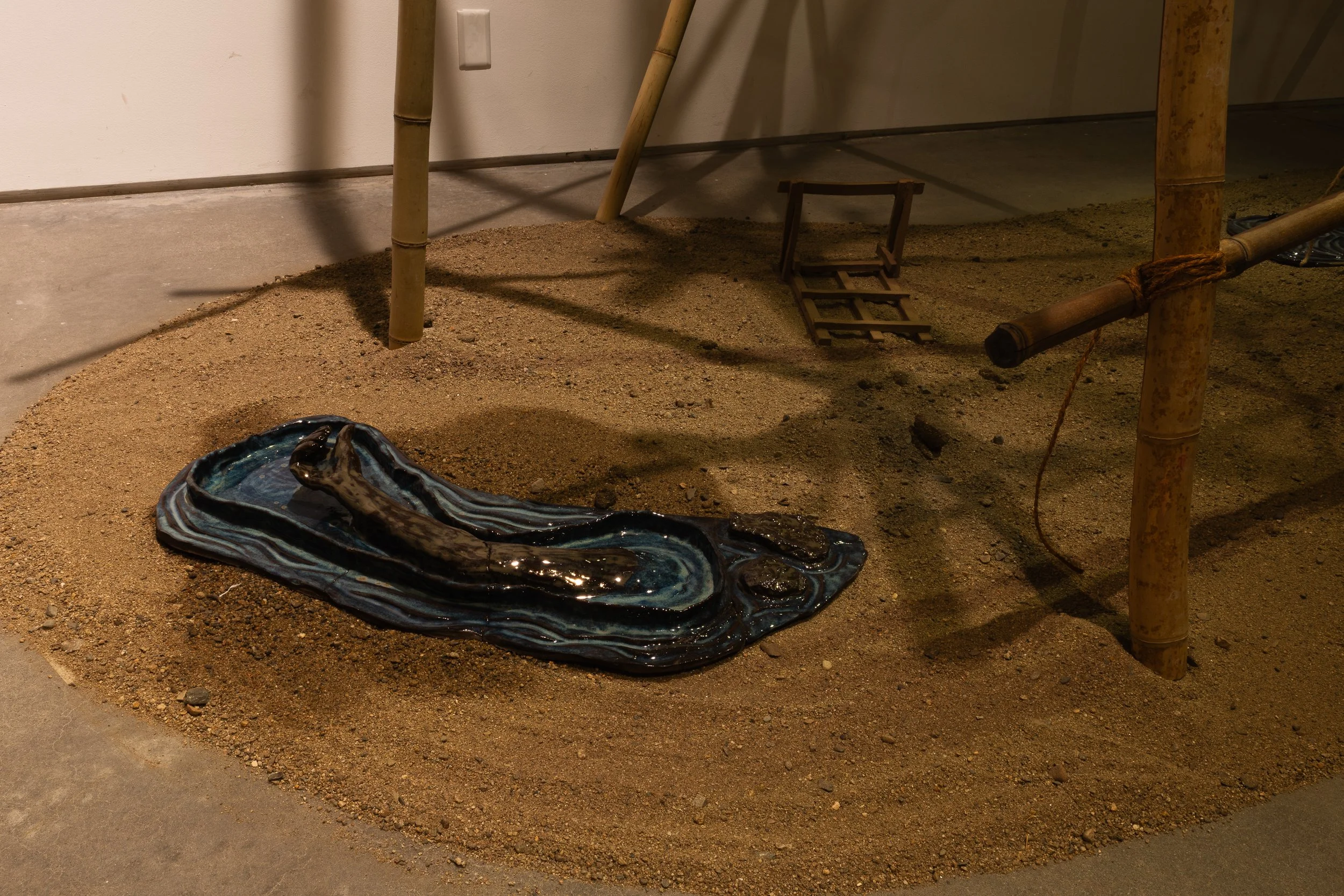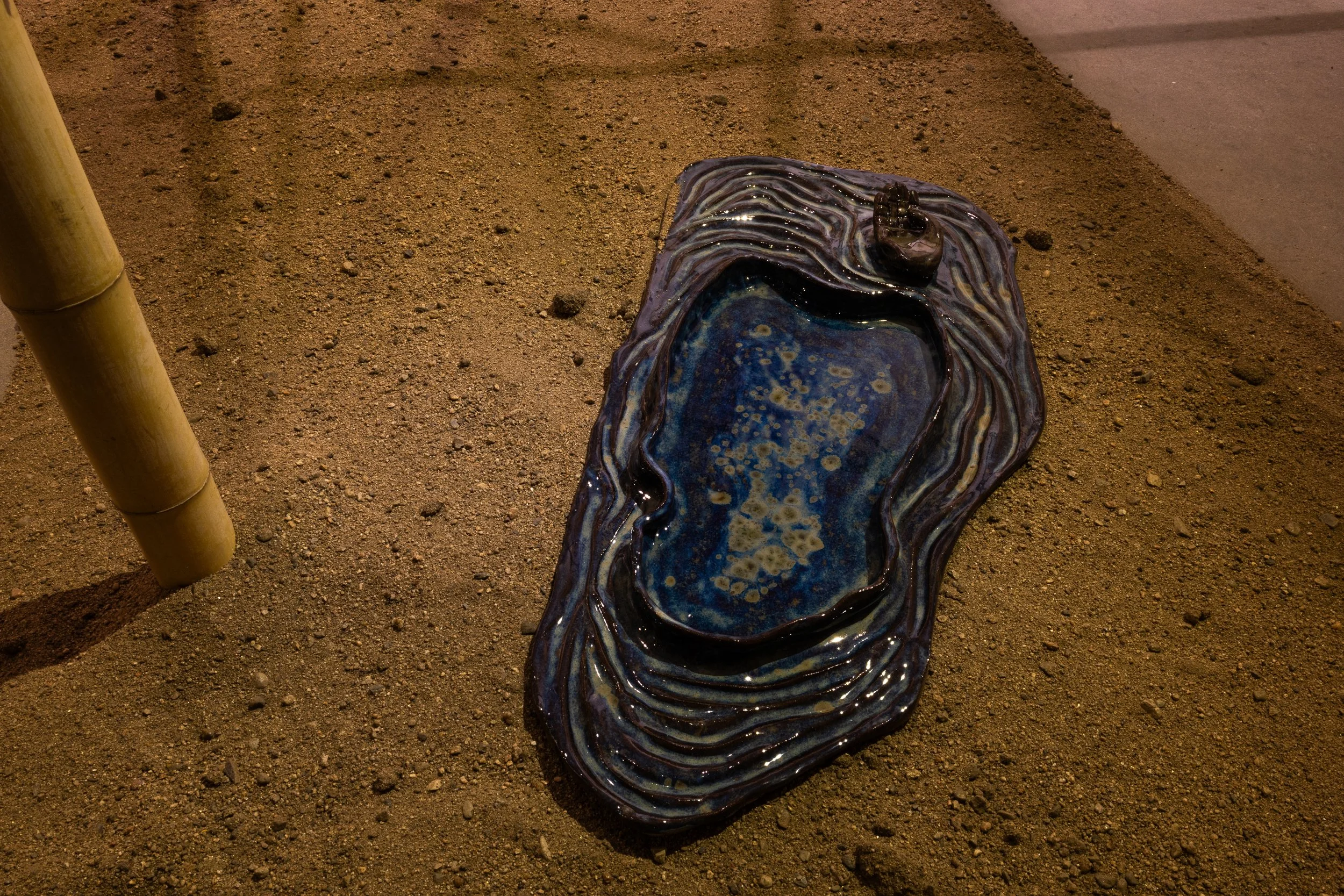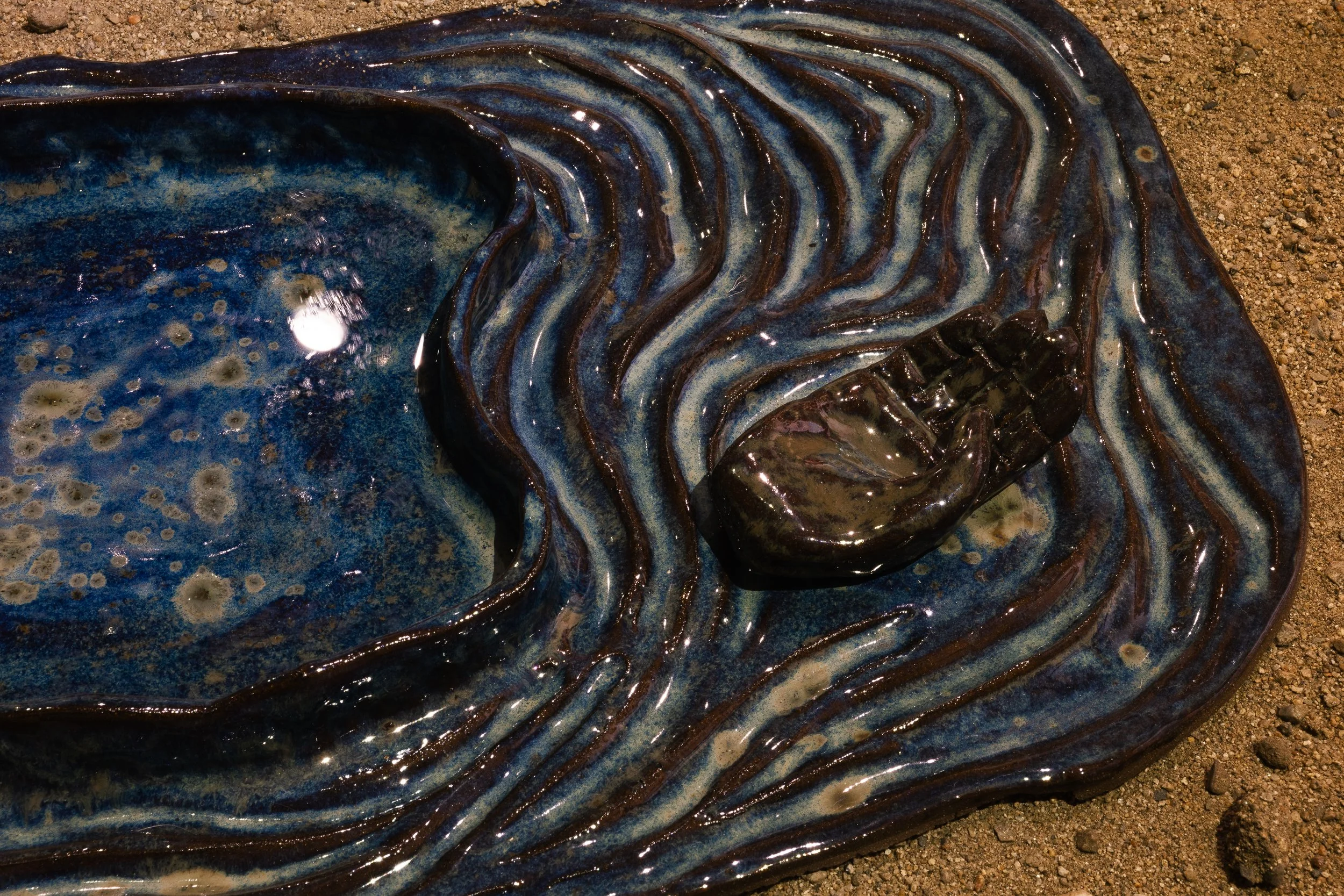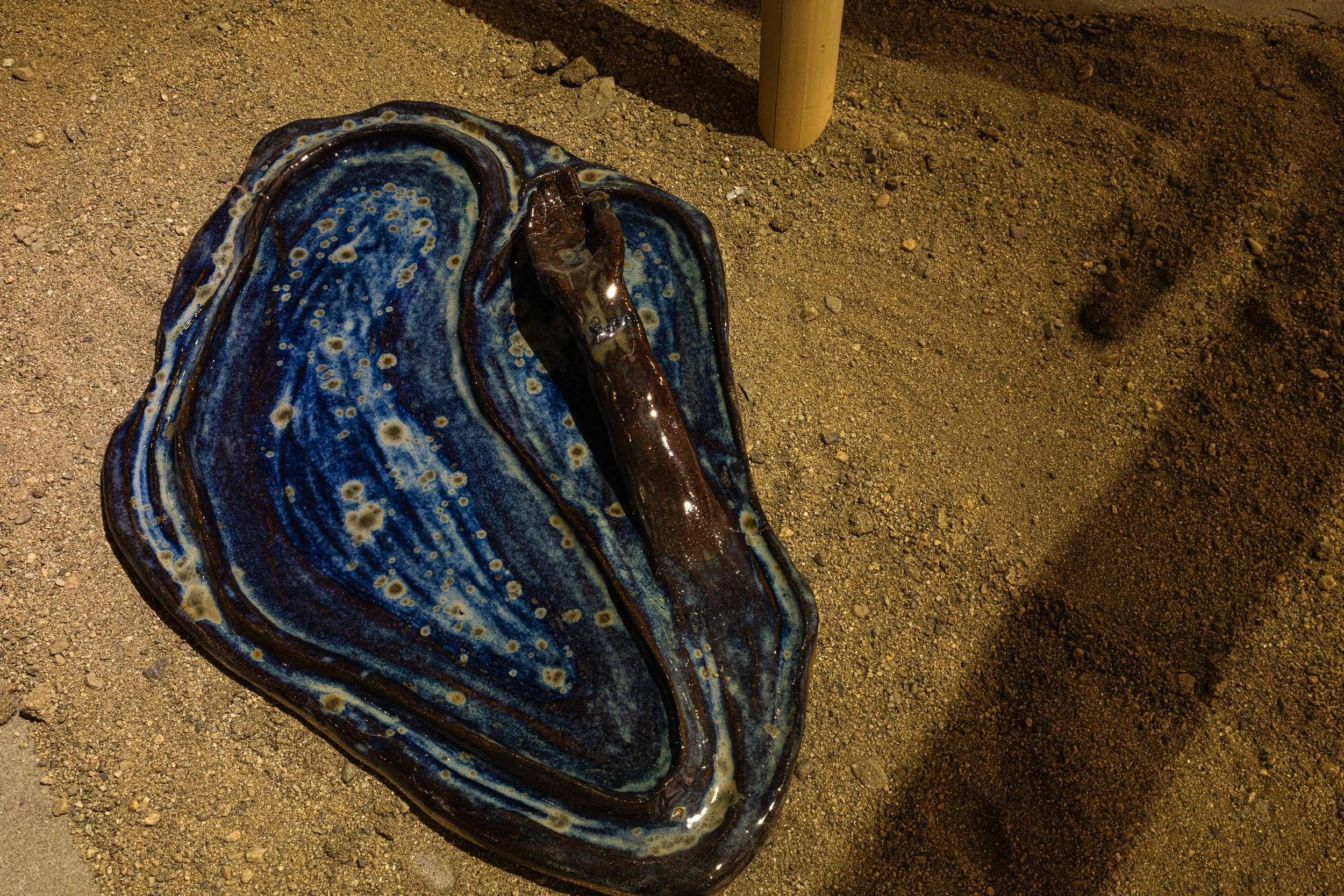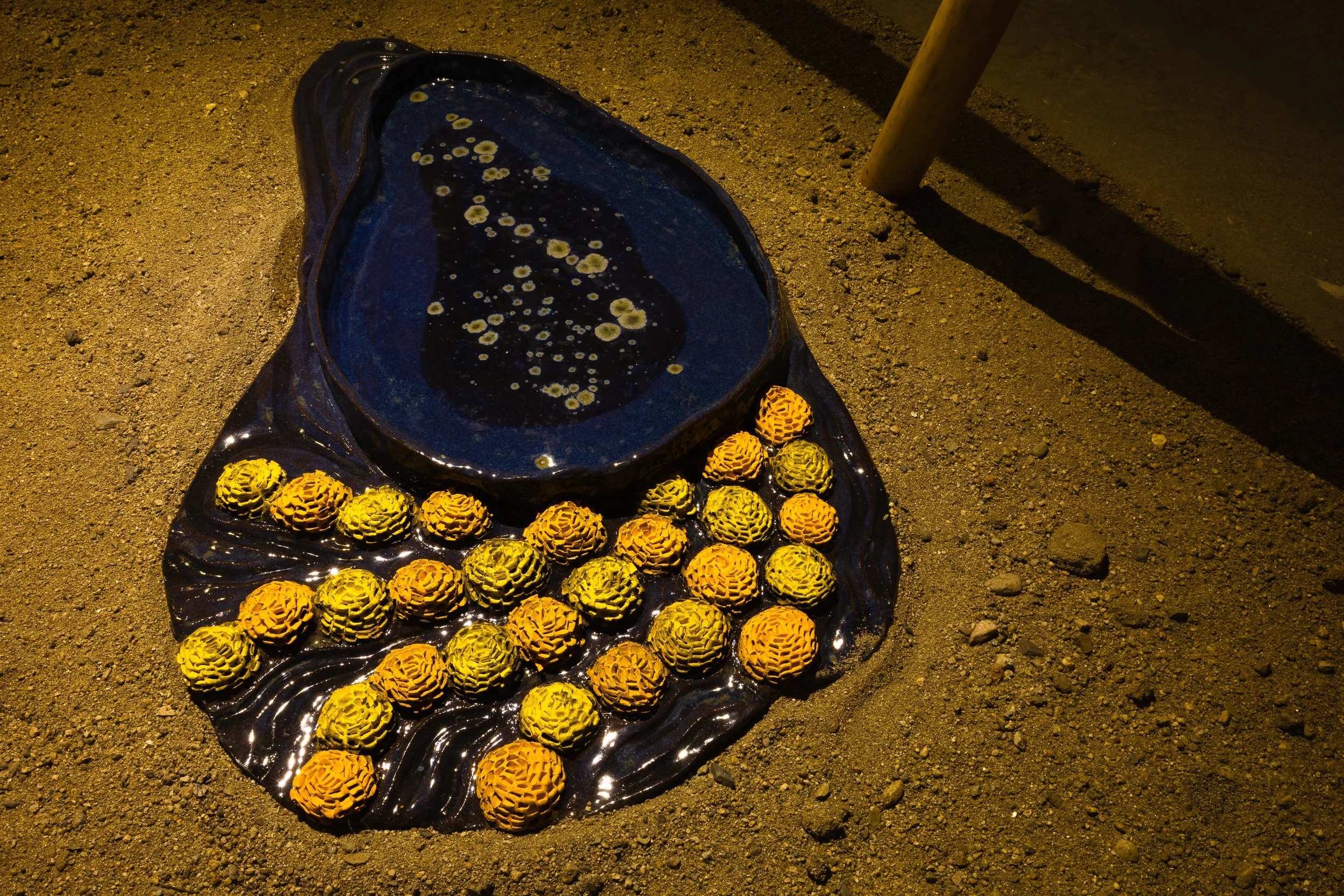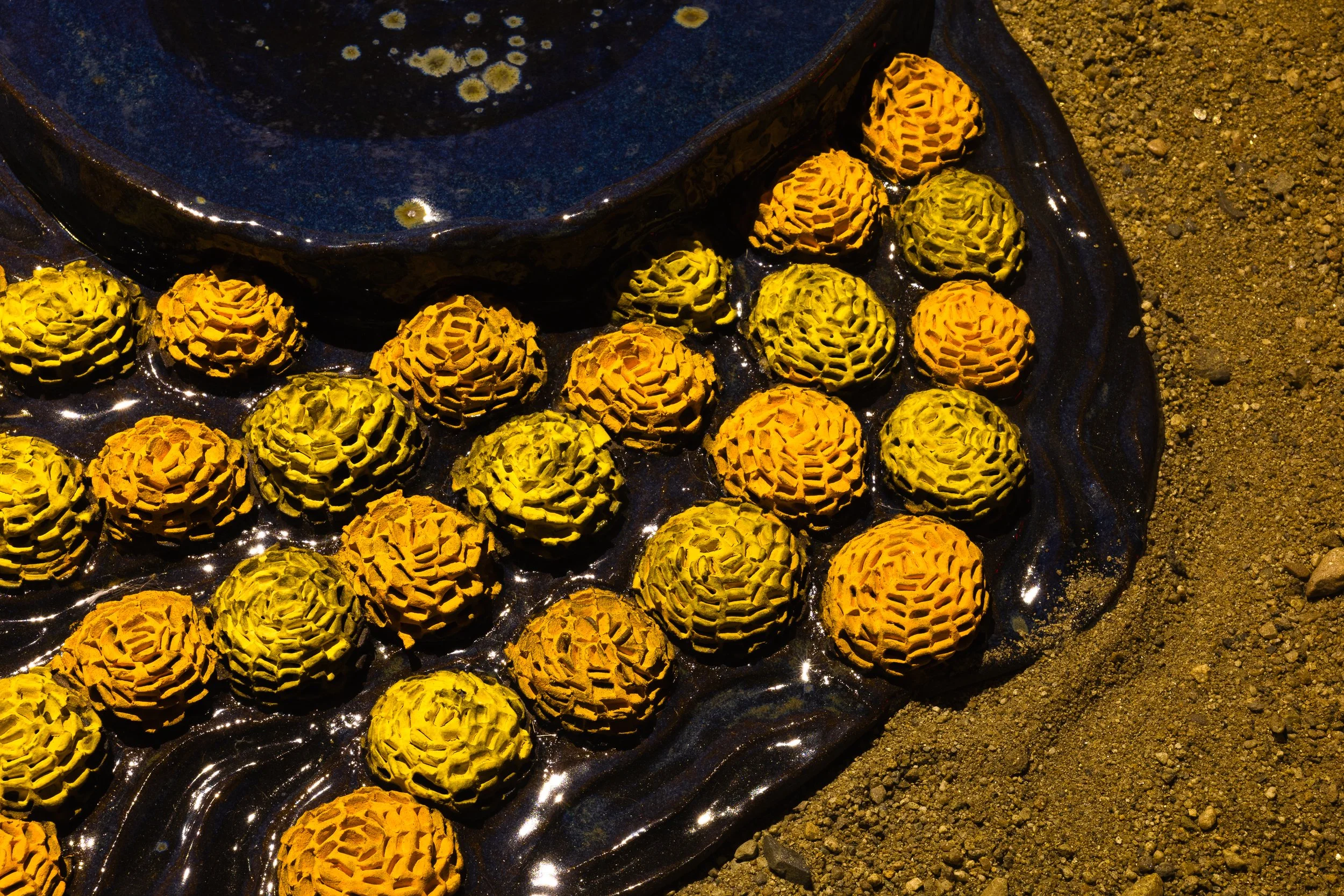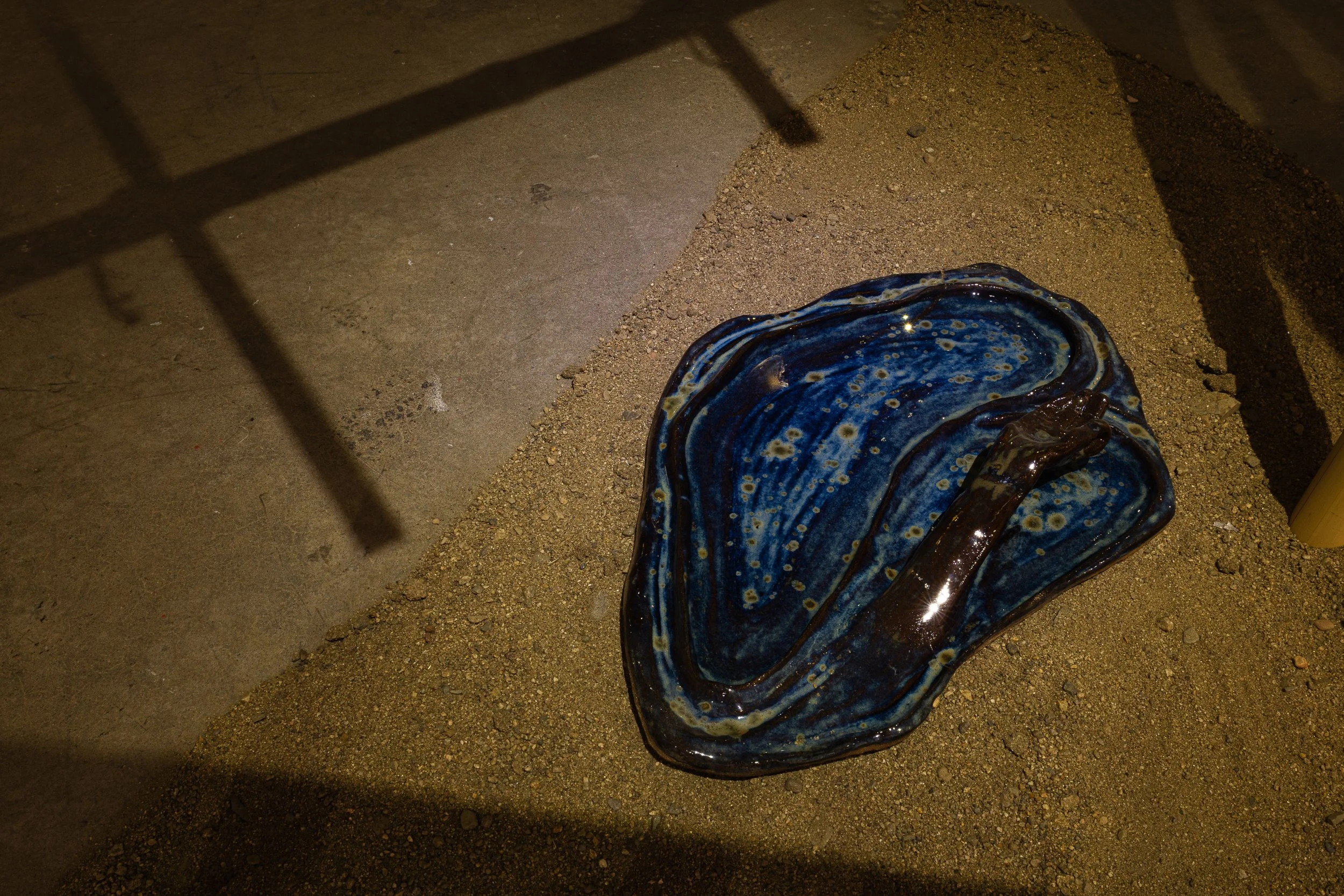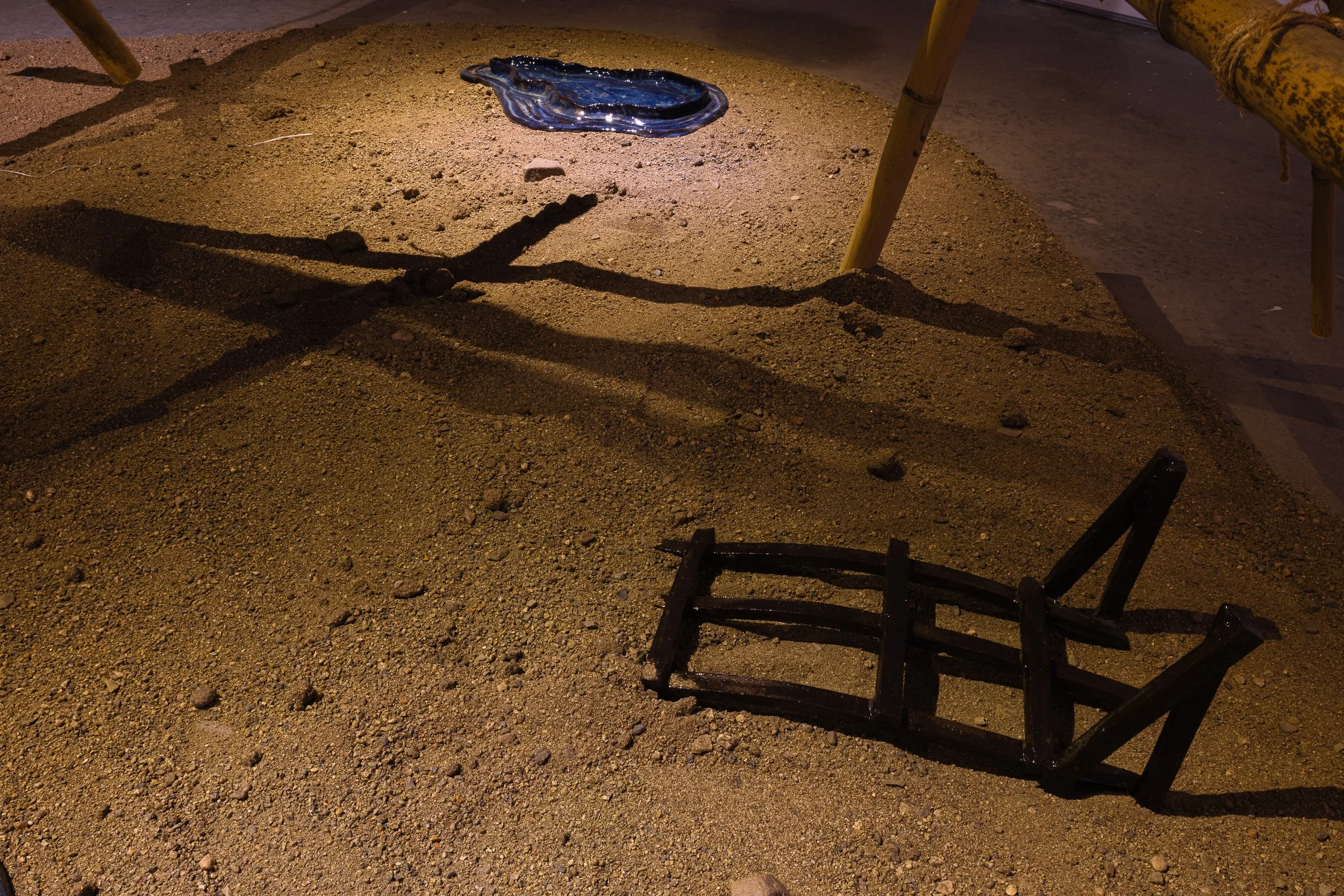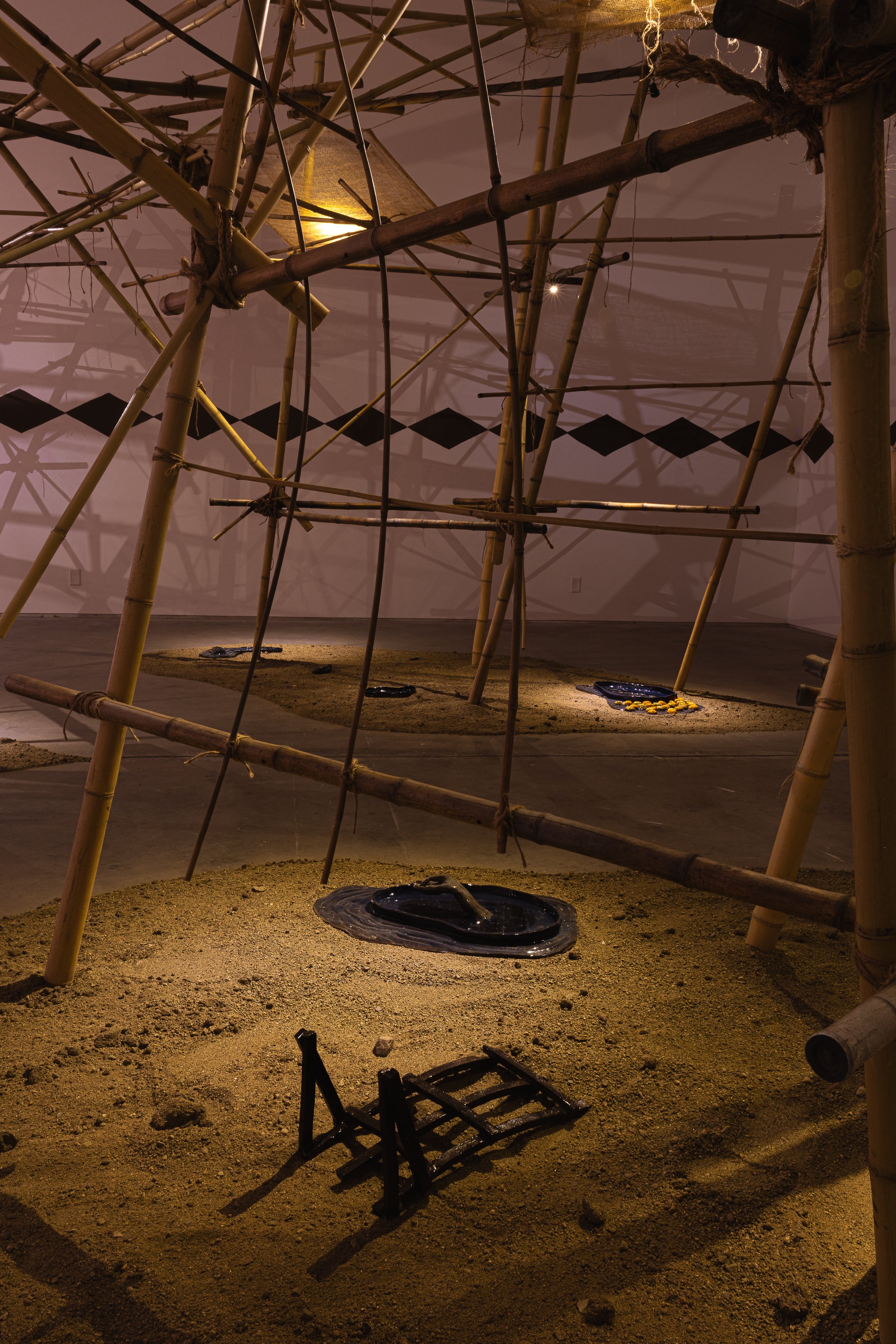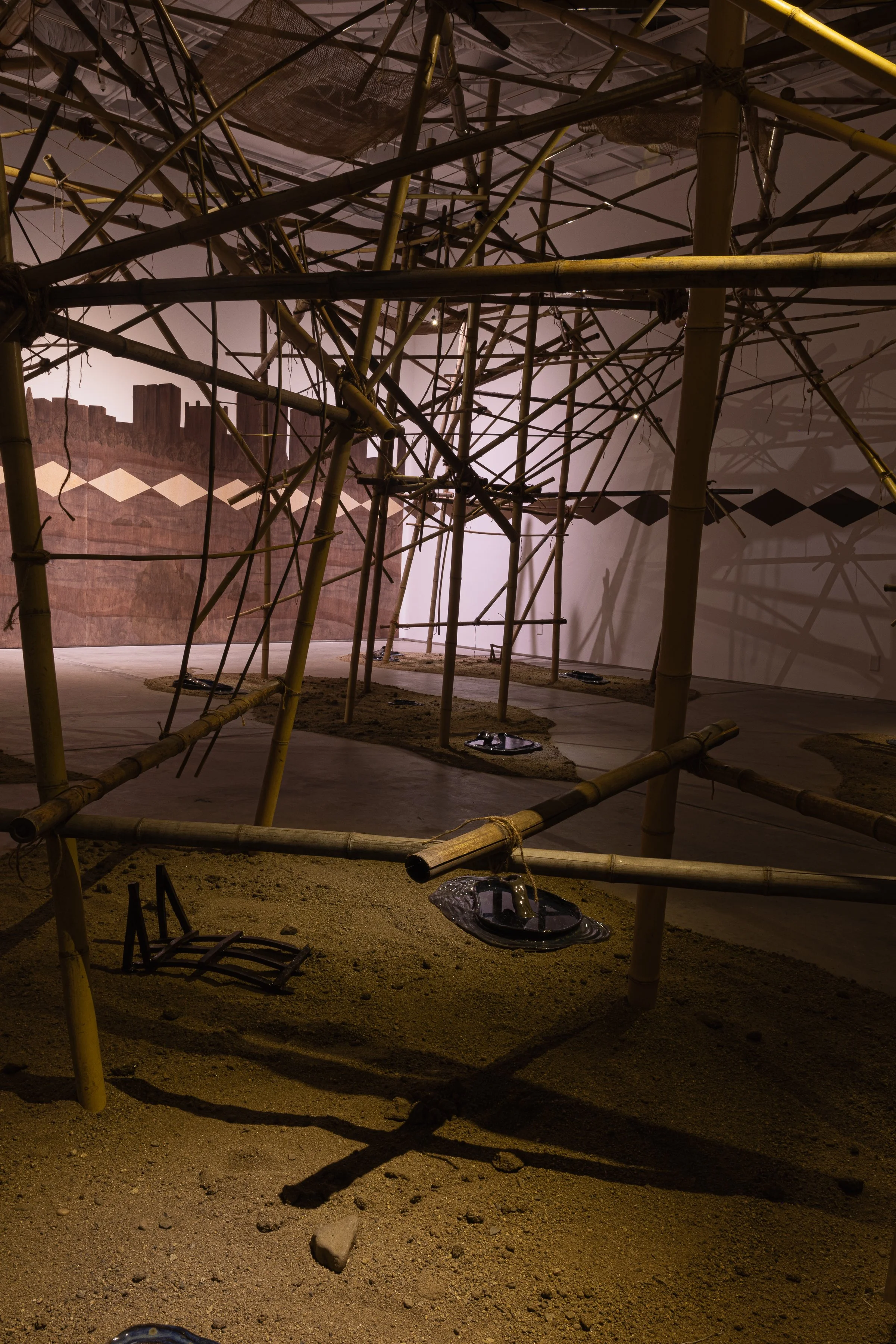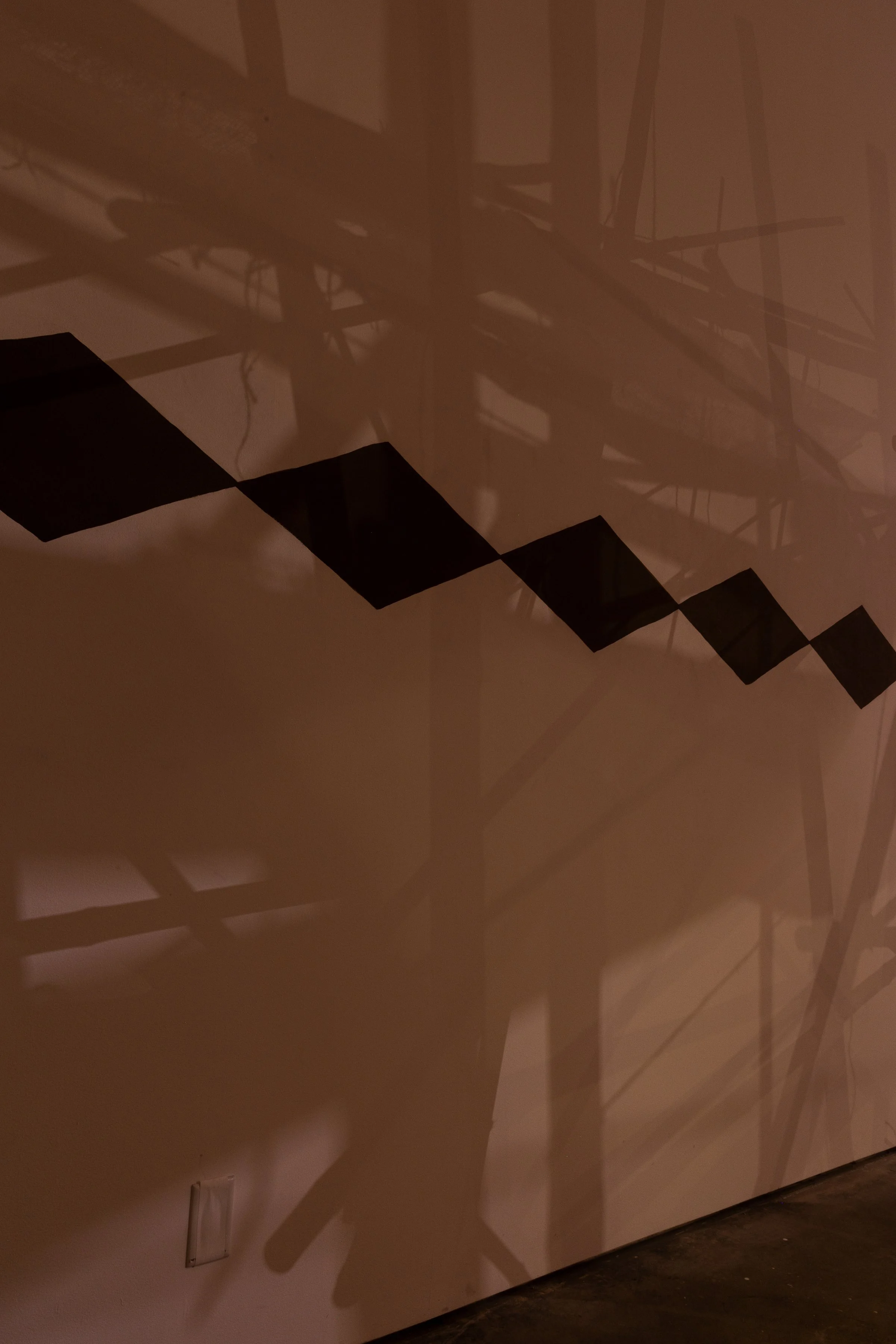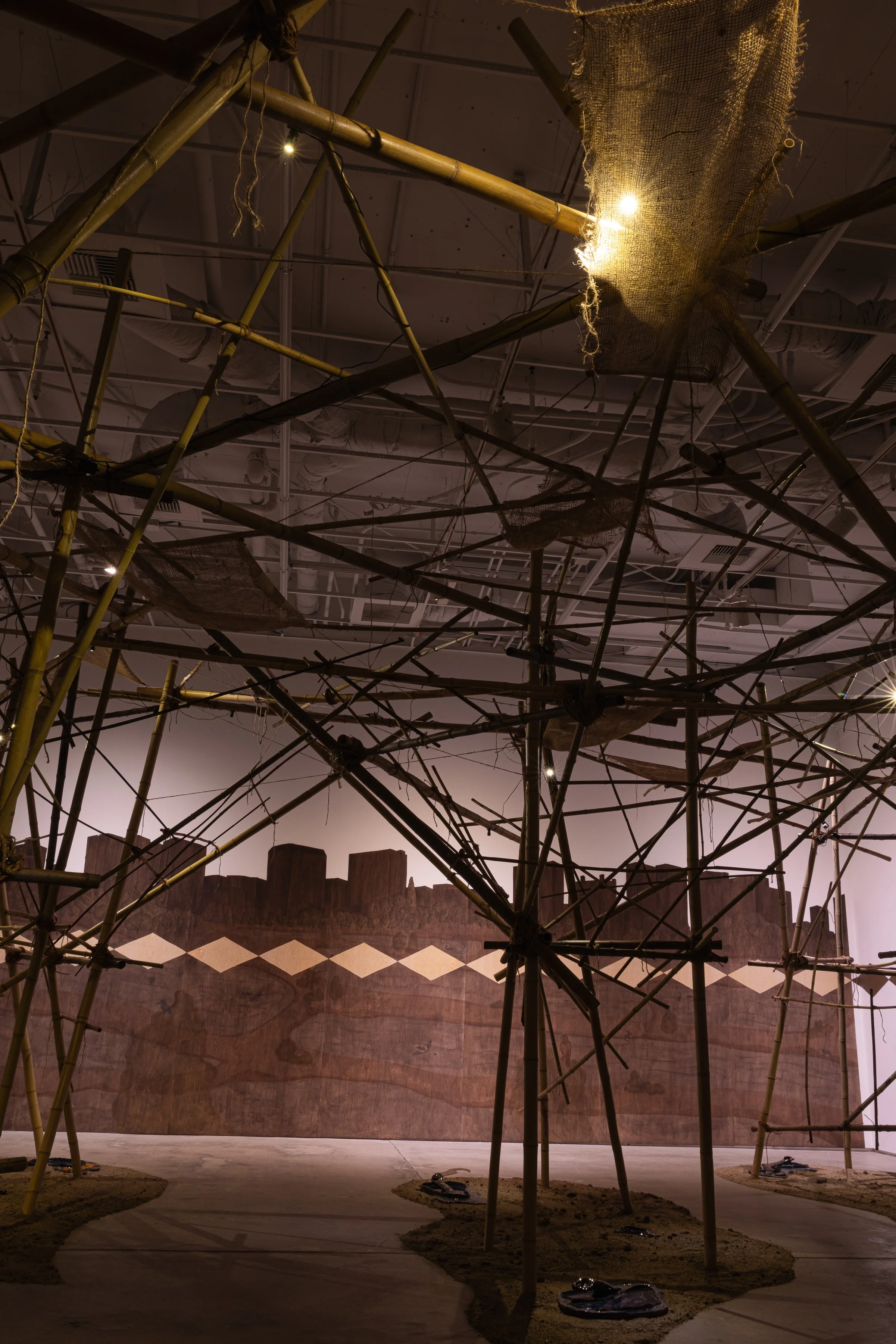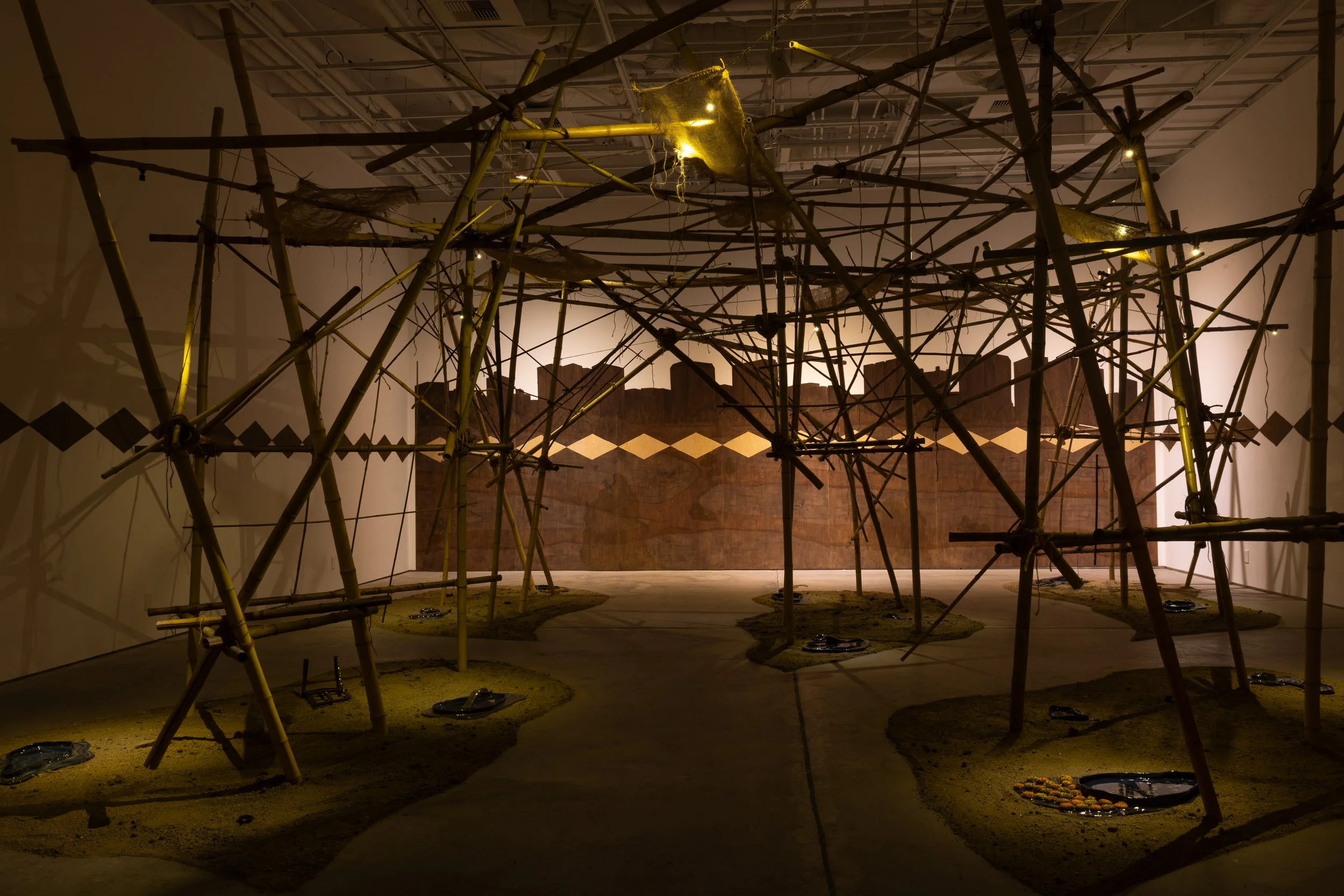
In the scaffolding of the pandal, we are unburdened from that which must be upheld. This comes as a great relief. The material of the puja has been drained of its ritual overlay and thus its mirror function. If it offers an image of the “human”, then this image is one that turns from the mandate of consensus or from representation altogether. To accommodate this vision, a renovation of the concept of urban subjectivity is called for. We are not given the figure of the idol, upright and dry, but the figure immersed and therefore freed from its idealised status. Who confers this bounded status?
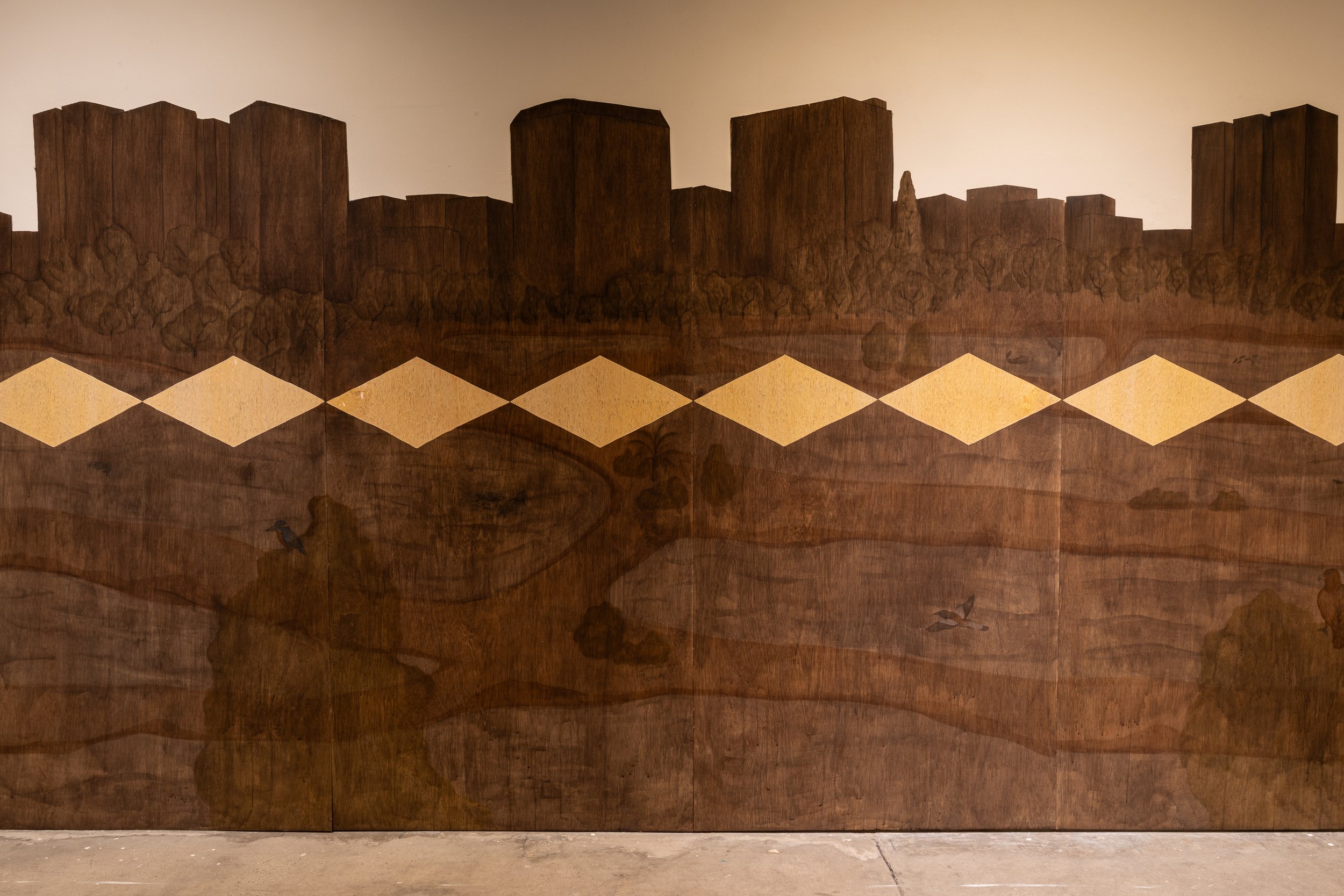
Subversively, the post-ritual pandal suggests that the work of reification is collective. As scholars of public infrastructure have long understood, even decentralised projects involving a multitude of heterogeneous actors are liable to be rerouted by state interests. Evading capture, Rahul Basu’s vision follows the flow both upstream and down. In a remote mountain stream floats the material residue of human ceremony. Released to the current, the faded flowers and pigments only increase in their affective pull. Downstream, the swamps of Bengal succumb to the onward advance of development. In Kolkata, development is subliminally marked by a parade of blue-and-white stripes and diamond patterns: the perversely hypnotic signature of the city’s municipal corporation. Rare kingfishers and the diamonds alike are called upon as commentaries on the same scene: the pandal.
If it is easier to say what Rahul Basu’s work does not do, where it is not sited, or what types of facades it does not support, then this is because his project is thoroughly deconstructive. This constitutes its participatory dimension in that the skeletal form of the pandal calibrates a set of gaps, interstices, and pathways facilitated by removal. It is in this sense that the pandal is driven by abstraction, though of a very different kind from that enacted by the graphic capture of Kolkata: the materials of the pandal withdraw, turning away from their overdetermining signification to persist not just after the ritual, but without it. This is sculpture that halts the ceaseless affirmation of culture.
Written by Zachary Thompson